Custom Bar Mats for Coffee Shops & Cafes
Espresso bars take a different kind of daily punishment than a cocktail bar, so custom coffee bar mats need to handle steam, milk spills, coffee grounds, and constant portafilter knocking rather than ice and citrus juice. Getting the size, placement, and material right the first time saves a cafe from a soggy, curling mat within the first month of service and keeps the counter looking sharp for customers standing right at eye level with the espresso machine.
This guide walks through where cafes typically place branded mats, how long a mat should be for different counter setups, and what to send us so your first order fits the space instead of needing a reorder.
Where cafes typically place branded mats
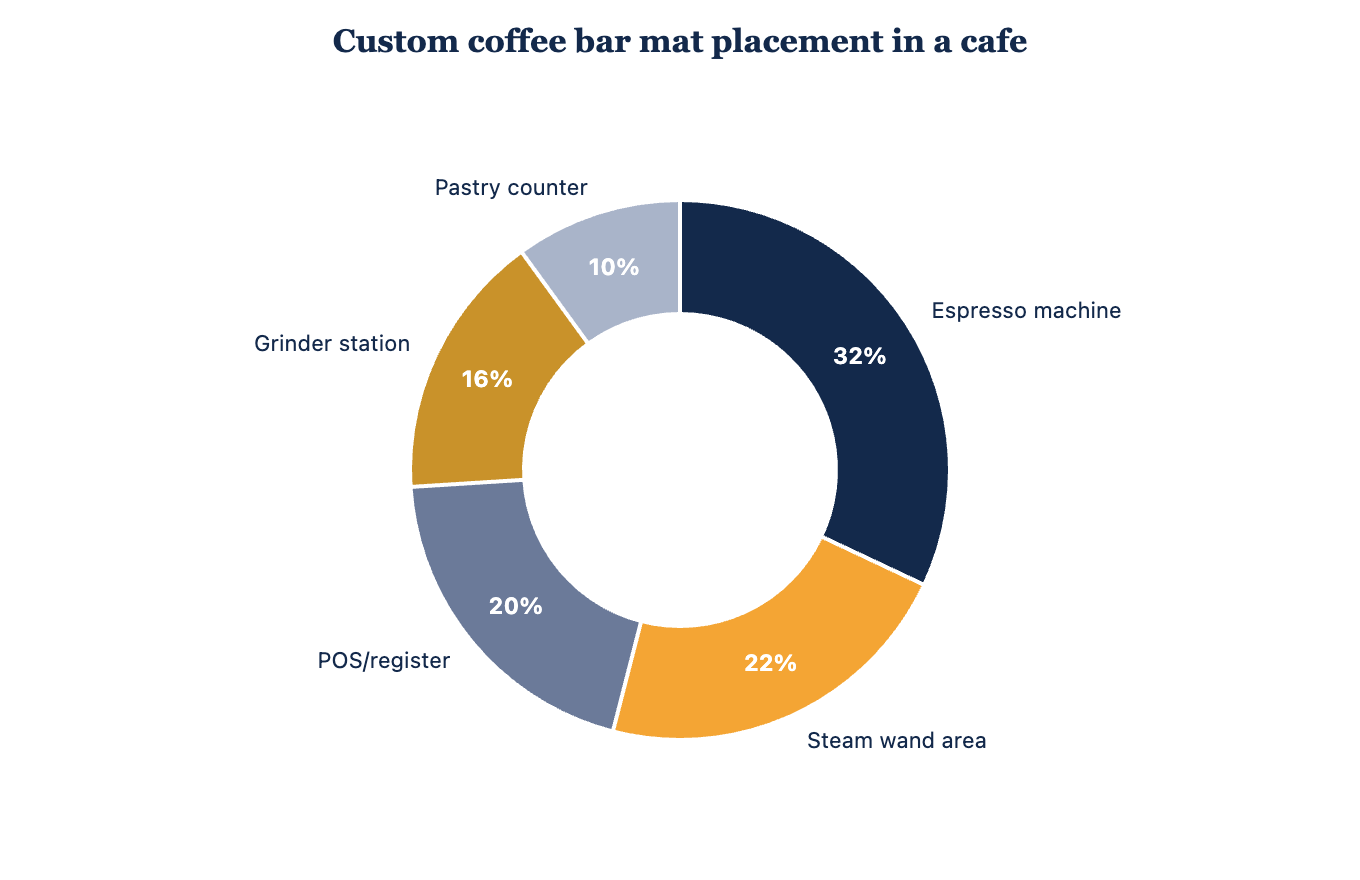
Placement decisions come down to where spills, drips, and knock-outs actually happen behind the counter. The espresso machine itself sees the most mat coverage in most cafes, since that is where portafilters get knocked, cups get filled, and milk gets steamed within a few feet. The steam wand area is often given its own dedicated mat because milk residue and condensation build up there differently than the machine’s brew group, and a separate mat makes cleanup and swapping faster during a rush. Cafes running a single mat across the whole under-machine area sometimes find that one heavy-traffic zone wears out well before the rest of the mat, which is another reason many shops split the espresso and steam wand zones into two separate pieces rather than one continuous run.
POS, grinder, and pastry counter mats
The register and POS area gets a mat less for spill protection and more for branding and cash-handling comfort, since baristas and cashiers stand there for long stretches during a shift. Grinder stations pick up loose grounds and static-charged chaff, so a mat there helps contain the mess and protects the counter finish underneath. Pastry counters see the least coverage of the group, usually reserved for cafes with a full bakery case where a smaller branded mat sits under the tip jar or near the register rather than under the food case itself. A few cafes also add a small mat at the milk fridge or bar-back prep area, though that placement is far less common and usually only shows up in higher-volume shops with a dedicated prep station separate from the main bar.
Sizing your mats to the counter
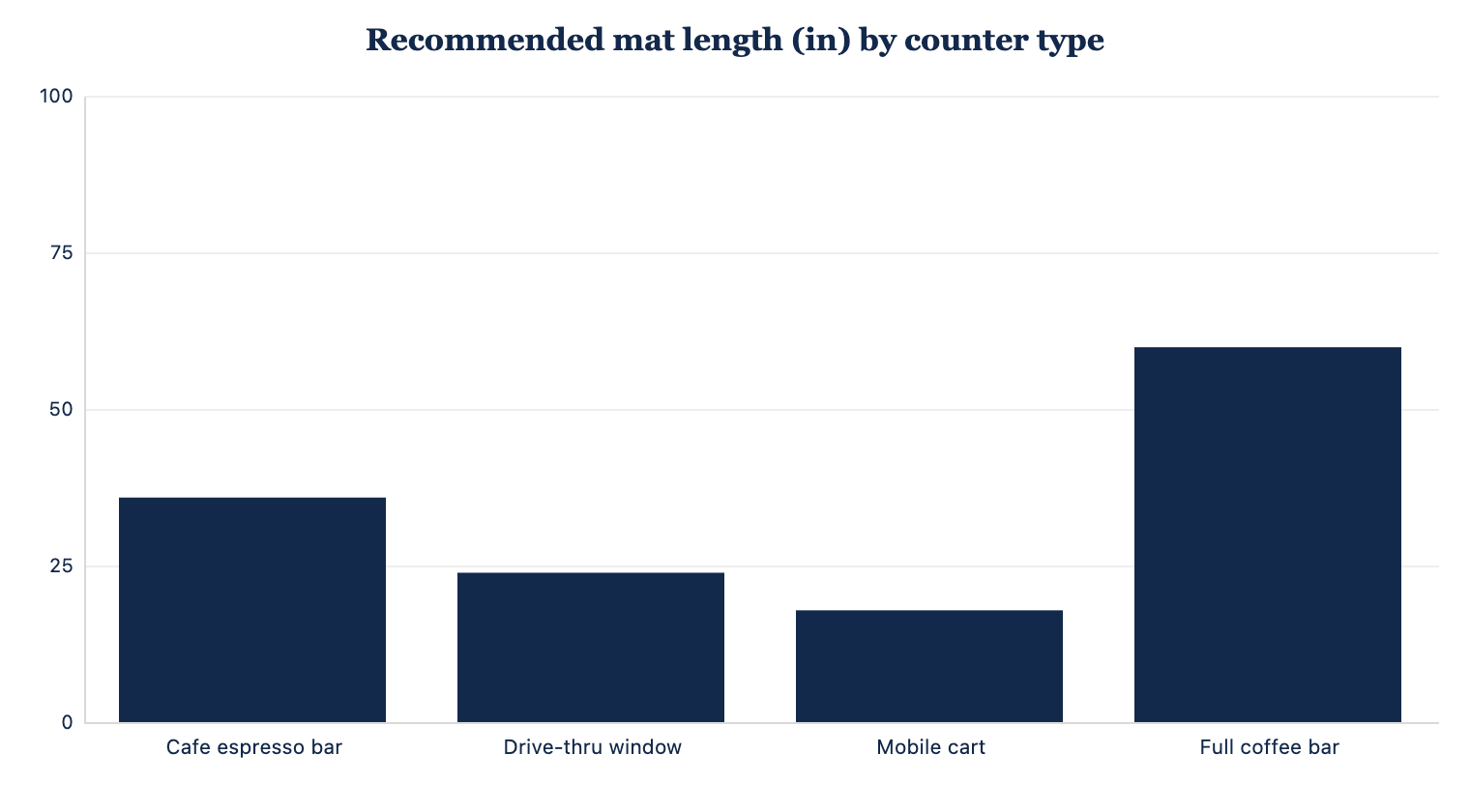
Length matters more than most cafe owners expect when ordering custom coffee bar mats, because an undersized mat leaves gaps where spills reach bare counter, and an oversized mat crowds cups, portafilters, and tamping tools. A standard cafe espresso bar with a two- or three-group machine typically needs a mid-length mat that spans the width of the machine plus a few extra inches on either side for staging cups. Drive-thru windows run shorter, tighter counters and usually need a more compact mat sized to the smaller working area, while a full coffee bar with backup equipment and extra prep space can run a considerably longer mat to cover the entire service run. Measuring twice before ordering matters here: send us the counter’s total width, the machine’s footprint, and how much staging room baristas need on either side so the mat lands flush rather than overhanging an edge or leaving a gap.
| Counter type | Typical setup | Mat priority |
|---|---|---|
| Cafe espresso bar | Two to three group machine | Coverage under machine plus staging area |
| Drive-thru window | Compact single-group setup | Tight fit, fast wipe-down |
| Mobile cart | Portable, single group | Lightweight, easy to roll up |
| Full coffee bar | Multiple machines, backup gear | Full-length run across the service line |
Material and cleaning considerations for a coffee counter
Coffee counters deal with a different mess profile than a cocktail bar: fine grounds, milk residue, and steam condensation instead of ice melt and citrus. A textured rubber surface with raised channels helps grounds and small spills stay contained rather than pooling flat across the mat, and it makes the daily wipe-down or hose rinse faster between shifts. Cafes running high volume through a single espresso bar should plan on rinsing or swapping mats more often than a lower-volume boutique shop, since milk residue left to sit can affect both grip and appearance faster than most owners expect. Choosing a mat thickness that resists curling at the edges also matters more on a coffee counter than people assume, since a thin mat exposed to repeated steam and heat near the group heads can start to warp at the corners within a few months, while a properly rated rubber compound holds its shape through a full season of daily heat cycling.
Anti-fatigue comfort for baristas
Baristas often stand in roughly the same two or three feet of counter space for an entire shift, so a mat with some cushion underfoot, rather than a purely decorative thin overlay, can meaningfully reduce foot and back fatigue over a long day. Many cafes choose a slightly thicker rubber compound specifically for the espresso machine and steam wand zones for this reason, while thinner, purely branded mats are fine for lower-traffic spots like the pastry counter where nobody stands in one place for long. Non-slip backing is worth specifying as well, since a wet counter combined with a mat that shifts underfoot is both a spill risk and a safety concern during a packed morning rush.
Branding placement on the mat itself
Most cafes put their primary logo on the mat under the espresso machine, since that is the spot customers see most while waiting for a drink, and a secondary, smaller mark often goes on the steam wand mat or POS mat for consistency. Keep artwork simple and high-contrast for the best read at a glance; fine script logos that look great on a cup sleeve can lose legibility on a mat viewed from across the counter under espresso machine steam and lighting.
Ordering for multiple locations
Cafes opening a second or third location should standardize mat size and placement across stores so the counter layout and photos look consistent for social media and press, even if machine models differ slightly between locations. Keeping a record of exact dimensions, mat thickness, and logo placement from your first order also makes reordering fast when a mat needs replacing rather than curling and coffee-stained edges, and it keeps every location matching without a fresh round of measuring and proofing each time a shop opens. Seasonal or promotional mats are worth planning separately from your everyday branded mat, since swapping a lighter, less expensive mat in for a short run keeps the durable everyday mat from being pulled for a one-off design. Browse examples on our homepage, or read about how we handle multi-location orders on the about page.
Bottom line
Sizing and placing custom coffee bar mats around where spills and knock-outs actually happen, rather than guessing at a generic size, keeps your counter looking sharp and your baristas working faster during a rush.
Ready to order mats for your cafe?
Tell us your counter layout, machine setup, and logo and we will recommend the right sizes and placement for your space.
Get a QuoteHome · About · Buying guides · Companion guide: bar mat printing methods: screen print vs deboss vs 3D logo
Win Free Stuff
Enter below for a chance to win plus receive 10% off your first order.
🎉 You are in!
Check your email for your 10% off code. Good luck!