Bar Mat Printing Methods: Screen Print vs Deboss vs 3D Logo
Ordering branded rubber bar mats sounds simple until you hit the first real decision: which custom bar mat printing method actually keeps your logo readable after months of ice buckets, bottle openers, spilled cocktails, and a nightly trip through the wash-down hose. Screen printing, debossing, and a raised 3D logo all look sharp coming out of the box, but they age at very different rates once a busy service bar puts them to work every single shift.
This guide breaks down how the three common decoration methods compare on durability, detail, and cost, plus roughly how long each one holds up under daily bar use, so you can match the technique to your bar’s volume and budget instead of guessing.
How the three printing methods compare at a glance
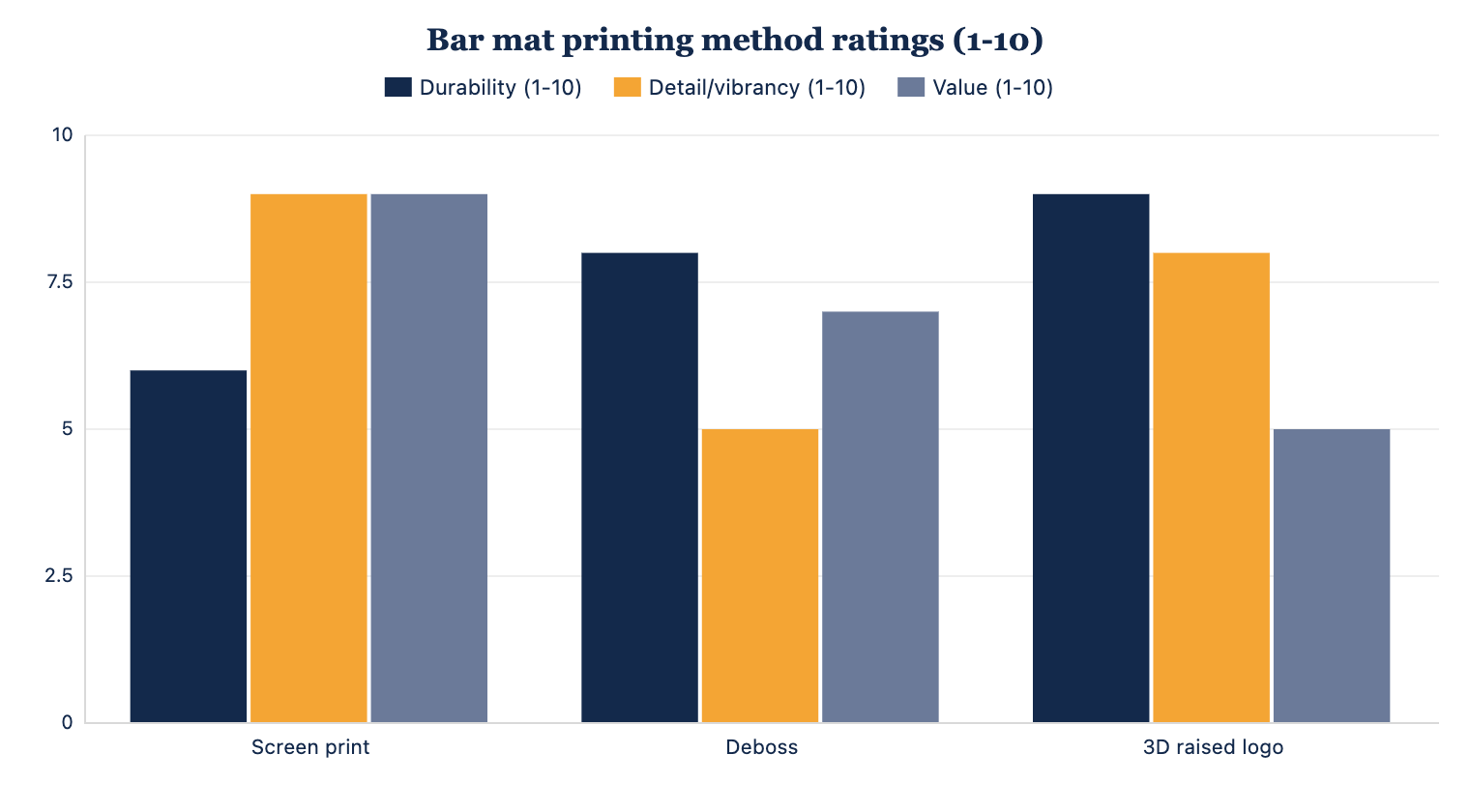
Rating each method across durability, detail and color vibrancy, and overall value on a simple 1-10 scale makes the trade-offs easy to see. Screen printing wins on fine detail and color vibrancy because ink can reproduce gradients, multiple colors, and small text cleanly, while a 3D raised logo wins on physical durability since the logo is molded into the rubber itself rather than sitting on top of it. Debossing splits the difference: it is tough and low-cost, but limited to a single recessed color and simpler shapes.
Screen printing
Screen printing is the most common approach for custom bar mat printing because it can reproduce full-color logos, gradients, and small text with a level of detail the other two methods cannot match. Ink is pressed through a fine mesh screen directly onto the rubber surface, so a standard screen print sits mostly on top of the mat rather than inside it. On a mat that only sees light use, standard screen print can look great for a season or two, but on a high-traffic service bar the top layer of ink is the first thing to show wear from bottle scraping and constant wiping. Ordering a thicker ink deposit, sometimes called a heavy or double pass print, meaningfully extends the life of a screen-printed mat and is worth the small upcharge for any bar running full shifts seven days a week.
Deboss (recessed logo)
Debossing presses your logo shape into the rubber during molding, creating a recessed impression rather than a printed layer. Because there is no ink sitting on the surface, there is nothing to scrape, chip, or fade from UV exposure near a window seat, which makes deboss a genuinely durable option for busy bars that go through mats fast. The trade-off is detail: fine text, small serif fonts, and multi-color artwork do not translate well into a single-tone recessed shape, so debossing works best for simple wordmarks, icons, or bold single-color logos rather than a detailed crest or gradient design.
3D raised logo
A 3D raised logo takes the opposite approach from debossing, molding your logo so it stands up off the surface of the mat in the rubber itself. Because the artwork is part of the rubber and not a surface coating, it holds up to years of scraping, dragging glasses, and hose-down cleaning better than either screen print option, and it reads well from across a room thanks to the shadow the raised edge creates under bar lighting. The trade-off is cost and lead time: 3D molds require custom tooling, so this method usually makes the most sense for a flagship bar mat you plan to reorder for years rather than a one-off event mat.
How long each method actually lasts behind the bar
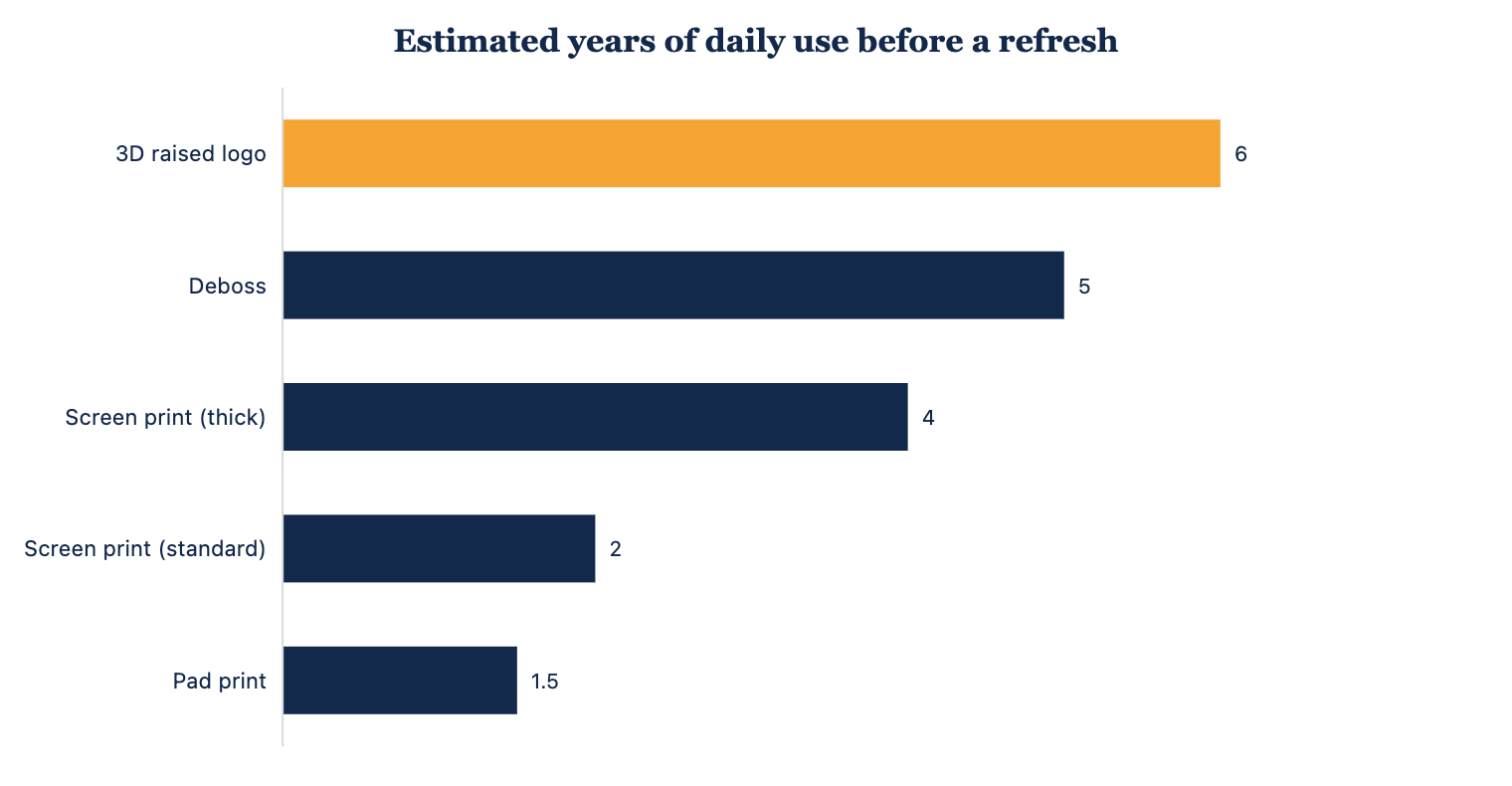
Real-world lifespan varies with how many covers a bar runs and how the mats get cleaned, but the general pattern holds across most venues we work with. A 3D raised logo typically outlasts every other option because there is no printed layer to wear away, while a standard, single-pass screen print on a high-volume service bar is usually the first to need a refresh. Upgrading to a thicker screen print deposit or switching to deboss for simple logos both stretch the typical replacement cycle noticeably.
| Method | Detail level | Best for |
|---|---|---|
| Screen print | High (full color, fine detail) | Detailed logos, seasonal or event mats |
| Deboss | Low-mid (single tone, bold shapes) | Simple wordmarks, budget-conscious bars |
| 3D raised logo | Medium (bold shapes, strong shadow read) | Flagship bars, long-term reorders |
Matching the method to your bar’s volume
A low-volume wine bar or boutique tasting room that only runs a handful of covers a night can lean on standard screen printing without much worry, since the mat simply is not absorbing the same daily abuse as a nightclub service well. High-volume sports bars, nightclubs, and service bars behind a busy dining room should weight durability heavily and either upgrade to a thick screen print, choose deboss for a simple mark, or invest in a 3D raised logo if the mat sits front and center at the main bar. Mixed venues sometimes use two tiers: a durable 3D or thick screen print at the primary service bar, and a lighter standard screen print on satellite or patio bars that see less daily contact.
Getting your artwork ready
Send us vector artwork whenever possible and let us know your bar’s typical nightly volume so we can recommend the right method rather than defaulting to the cheapest option. Fine gradients and thin script fonts translate best to screen printing; bold, simplified marks translate best to deboss or a 3D raised logo. If your logo has both a detailed version and a simplified icon, the simplified version is usually the safer bet for a mat that will see years of bar-back handling.
You can see finished bar mat examples on our homepage, and read more about how we manage proofing and reorders on the about page before committing to a method and quantity.
Bottom line
There is no single best custom bar mat printing method for every bar; match the technique to how many shifts the mat will see and how much fine detail your logo actually needs, and it will still look sharp long after the first few busy weekends.
Ready to order custom bar mats?
Tell us your bar’s volume, mat size, and logo and we will recommend the best printing method for durability and budget.
Get a QuoteHome · About · Buying guides · Companion guide: custom bar mats for coffee shops and cafes
Win Free Stuff
Enter below for a chance to win plus receive 10% off your first order.
🎉 You are in!
Check your email for your 10% off code. Good luck!